
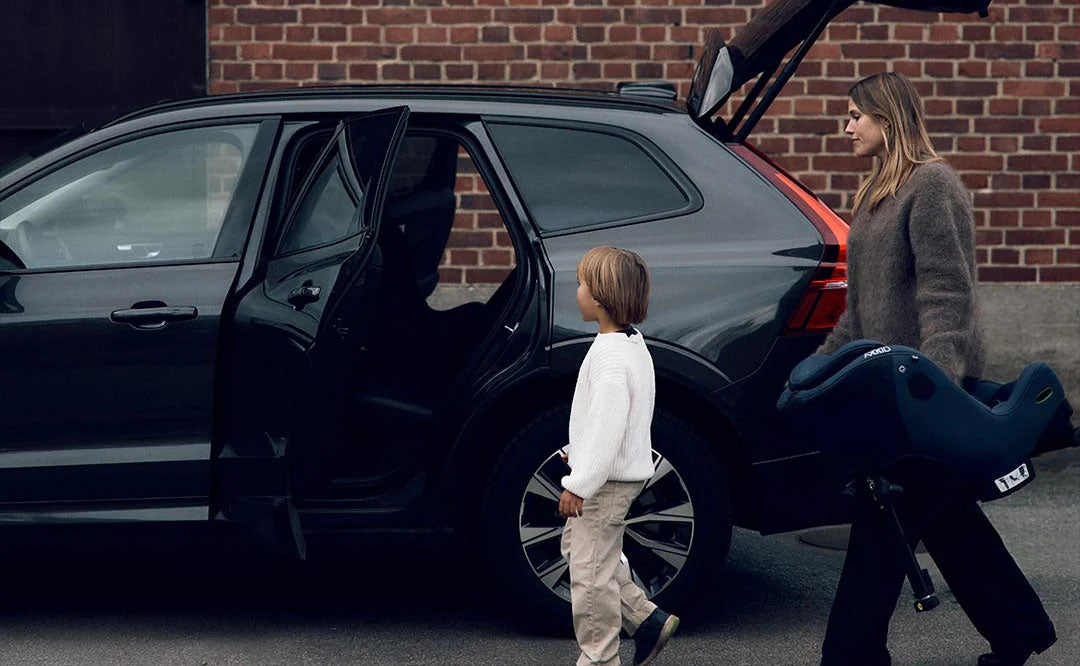
Axkid Minikid Range Comparison
The Safest Seats on the Market
Axkid Minikid Range Comparison
The Safest Seats on the Market
Axkid Minikid Range Comparison
The Safest Seats on the Market
Why Extended Rear Facing Matters
Before we dive into the comparisons, it's worth understanding why extended rear facing is so important. In a frontal collision, by far the most common and most dangerous type of crash, a rear-facing seat distributes the impact forces across a child's back, which is the strongest and most developed part of their body. Forward-facing seats, in contrast, place enormous strain on the neck, head, and spine — all of which are still developing in young children.
Sweden has advocated rear-facing travel for decades, and the research consistently shows it offers significantly greater protection for young children compared to forward-facing. The Axkid Minikid range is built around this philosophy, keeping children rear facing all the way up to approximately seven years of age.
What All Three Seats Have in Common
Before we get into the differences, it's essential to understand what the entire Minikid family shares, because when it comes to safety, all three start from an exceptionally high baseline.
- Swedish Plus Test approved. This voluntary safety standard goes significantly beyond the legal minimum. It specifically tests for neck forces in frontal collisions, and all three Minikid seats pass it to 125cm, meaning your child is protected not just to the minimum legal requirement, but to one of the most demanding safety benchmarks in the world.
- UN R129 certified. This is the current legal standard for car seats sold in the UK and Europe, and all three seats meet it.
- Belt-installed (no ISOFIX required). All three seats use the vehicle's seat belt for installation rather than ISOFIX clips. This actually gives them an advantage in versatility — they can be used in a wider range of vehicles and in more seating positions than ISOFIX-only alternatives.
- SafeLock™ integrated belt locking system. All three seats feature this belt management technology, which keeps the vehicle's seat belt correctly routed and locked in position, reducing the risk of installation error.
- CompactFit™ design. Every seat in the Minikid family is designed with a slim profile, making it possible to fit multiple seats across a back row and maximising legroom for the front seat passenger.
- Breathable, machine-washable fabrics. All models use materials designed for comfort and easy maintenance — an essential for families with young children.
- Rear facing from approximately 6 months to 7 years (the Core extends this to birth with an included infant insert).
Introducing the Three Seats
Axkid Minikid Core — The Newest Member
Launched in March 2026, the Axkid Minikid Core is the latest addition to the family and arguably the most innovative in terms of installation. Its defining feature is what it doesn't have: tether straps. Where the Pro and Max both rely on tether straps anchored to the vehicle floor, the Core uses the vehicle's seat belt, a support leg, and an adjustable anti-rebound bar.
This tether-free design might sound like a compromise, but it's actually a deliberate engineering choice that unlocks significantly greater versatility. Without tether straps to route and anchor, the Core can be installed in virtually any vehicle: passenger cars, vans, buses, and work vehicles. For families who share school run duties between two cars, or who regularly need to move the seat, this is transformative.
The Core also has a broader height range than the Pro and Max, starting from 40cm (birth) with an included infant insert, compared to 61cm (approximately 6 months) for the other two. It reaches the same upper limit of 125cm, but its maximum weight is 28kg rather than 36kg, still well beyond the point most children will reach before hitting the height limit.
The seat features an 8-position adjustable headrest (compared to 13 on the other two), the DualRecline™ 2-step recline system.
UK price: from approximately £350
Axkid Minikid 4 Pro — Trusted Safety at an Accessible Price
The Axkid Minikid 4 Pro is the successor to the beloved Axkid Movekid, which built a loyal following among extended rear-facing advocates in the UK. For parents already familiar with the Movekid, the Pro will feel like a natural evolution — the same core safety philosophy, refined and updated.
Like the Core, it is belt-installed, but the Pro uses manual tether straps that loop around to anchor the rear of the seat to the vehicle floor. There is a learning curve involved in mastering this installation, but once the technique is understood, it is a reliable and repeatable process. Axkid includes a clear 6-step visual guide directly on the seat to assist with this.
The Pro features the 13-position adjustable headrest and a 2-step recline. It does not include the magnetic shoulder straps found on the Max — the harness is a traditional clip-in design. This is the primary convenience trade-off when choosing the Pro over its siblings.
Its CompactFit™ design makes it a strong choice for smaller cars, and it can accommodate up to three seats in a row across a standard back seat. With a certified weight limit of 36kg and height range of 61–125cm, it covers children from approximately 6 months to 7 years.
The Pro is available in four colour options: Coastal Storm Black, Arctic Mist Grey, Glacier Lake Blue, and Forest Moss Green.
UK price: from approximately £395
Axkid Minikid 4 Max — The Flagship Experience
The Axkid Minikid 4 Max is the top of the range, and it's immediately apparent when you use it. It matches the Pro on safety — same Swedish Plus Test approval, same UN R129 certification, same 61–125cm and 36kg range — but goes considerably further in terms of day-to-day convenience and comfort.
The headline difference is the magnetic shoulder strap system. The shoulder straps magnetically clip out the way while you settle your child into the seat. For parents doing the school run twice a day, every day, this small feature adds up to a meaningful time and stress saving over the lifetime of the seat.
The Max also features auto-retracting tether straps, which work like a seatbelt mechanism — they self-tension during installation, removing the manual effort of tightening by hand. This makes achieving a consistently secure installation quicker and simpler than the Pro's manual system.
The recline system on the Max offers three positions rather than the two found on the Core and Pro, giving more precise control over your child's seating angle as they grow. It also comes with a 3-part padded colour-matched inlay with shoulder pads included as standard, and the fabric quality and finish reflect the premium positioning of the seat.
If colour choice matters in your household, the Max offers seven colourways versus the Pro's four and the Core's two at launch: Coastal Storm Black, Arctic Mist Grey, Glacier Lake Blue, Nordic Bloom, Beachgrass Beige, Driftwood Beige, and Forest Moss Green.
UK price: from approximately £465
Side-by-Side Comparison Table
Key Differences Explored in Depth
Installation: The Biggest Practical Difference
This is arguably the most important factor when choosing between the three seats, and it's where they diverge most significantly.
The Core's tether-free installation is genuinely groundbreaking for a rear-facing seat of this calibre. Using only the seat belt, support leg, and anti-rebound bar, installation reportedly takes around 30 seconds once you know what you're doing. There's no risk of incorrect tether strap routing, and the seat is equally straightforward in the front or back of any vehicle. If you regularly move between cars, use public transport vehicles, taxis, or non-standard vehicles, the Core is the only one of the three that handles all of these scenarios without compromise.
The Pro's manual tether strap system is the most hands-on of the three. The tethers need to be routed and tightened by hand after installation. While Axkid has made this as intuitive as possible with visual guides on the seat itself, it does require some practice before you feel fully confident. Once mastered, it is a secure and reliable system, and the technique quickly becomes second nature.
The Max's auto-retracting tether straps represent a significant quality-of-life improvement over the Pro. Rather than manual tightening, the straps self-tension much like a seatbelt, meaning the process is faster and more consistent. Combined with the magnetic shoulder straps, the Max is designed to minimise friction from every daily interaction with the seat.
Safety: Equal at the Top, with Nuances
All three seats pass the Swedish Plus Test and are UN R129 certified, so no parent should feel they're compromising on safety by choosing any of them. That said, there are some meaningful distinctions worth noting.
The Core's maximum weight of 28kg is lower than the 36kg ceiling on the Pro and Max. In practice, most children will reach 125cm height before they reach 28kg weight, so this rarely matters — but if you have a particularly heavy child, the Pro or Max provides additional headroom.
The Core's certifications do offer a genuine safety advantage in non-standard vehicles. If you or your partner drives a van, works in a vehicle with different belt configurations.
Both the Pro and Max have been tested using large crash test dummies and real-life simulations that exceed standard requirements. The Core has similarly been over-tested with a 2-point seat belt configuration. All three go beyond what the regulations require.
Comfort and Fit as Children Grow
The 13-position headrest on the Pro and Max gives more granular adjustment than the 8-position system on the Core. For families who expect to use the seat for several years from a young age, this additional range of adjustment may be relevant as children grow taller.
The 3-step recline on the Max, versus 2 steps on the Core and Pro, offers a middle-ground position that some parents find useful — particularly when a child is between the two clear preferences of sleeping position and upright sitting.
The Core's DualRecline™ system is designed with a wider recline range than the Pro or Max, which can actually be an advantage in vehicles with upright rear seats, where achieving the correct angle is often more challenging.
From Birth vs From 6 Months
Only the Core can be used from birth (40cm), with the included infant insert providing the necessary support for newborns. The Pro and Max start from 61cm (approximately 6 months). For families seeking a single seat from day one, this makes the Core the only option in the Minikid range.
Who Should Choose Which Seat?
Choose the Minikid Core if:
-
You regularly move the seat between vehicles (two-car families, shared care arrangements)
-
You drive a van, work vehicle, or non-standard car
-
You want the simplest possible installation process
-
You need a seat from birth without buying a separate infant seat
Choose the Minikid 4 Pro if:
-
You drive a standard passenger car and the seat will stay in one vehicle
-
You want Axkid's proven safety heritage at the most accessible price in the range
-
You have a smaller car where space is limited
-
You're comfortable investing a little time to learn the tether strap installation
-
You have a heavier child who may approach the 28kg limit before reaching 125cm
Choose the Minikid 4 Max if:
-
You want the very best Axkid makes with the most effortless daily use
-
The harness that clips out the way with magnets and auto-retracting tethers will genuinely improve your routine
-
You're likely to be doing multiple buckle-up and buckle-out sequences every day
-
Colour choice and fabric quality matter to you
-
You want the 3-step recline for more precise positioning control
A Note on Value £££
It's tempting to frame this as a simple price ladder; Core at the bottom, Max at the top, but that's not quite right. The Core isn't a budget version of the Max; it's a fundamentally different kind of seat designed for different families. Its tether-free installation and broader vehicle compatibility are genuine advantages, not cost-cutting measures.
The Pro represents outstanding value for families who want Axkid's safety without paying for premium features they don't need. The Max, costing £115 more than the Core and £70 over the Pro, delivers real-world convenience improvements that many parents find worth every penny once they experience them daily.
FAQ's
What is the difference between the Axkid Minikid Core, Pro and Max?
All three are belt-installed, rear-facing, Swedish Plus Test approved, and UN R129 certified. The Core (launched 2026) has no tether straps and starts from birth. The Pro uses manual tether straps. The Max is the premium option with auto-retracting tethers, magnetic shoulder straps to keep the harness out of the way, and a 3-step recline.
Are all three Minikid seats safe?
Yes all three pass the Swedish Plus Test and UN R129. The differences are about installation and convenience, not safety. You're getting the same core protection whichever you choose.
Which Minikid is best for a small car? All three use CompactFit™ and take up 15cm less space than comparable seats. The Core has a slight edge in tight spots as there are no tether straps to route. When in doubt, book a fitting appointment before you buy.
Can I use any of these seats from birth?
Only the Core, it starts from 40cm and includes an infant insert. The Pro and Max start from 61cm (around 6 months), so you'd need a separate infant carrier alongside them for the newborn stage.
How long can my child use a Minikid seat?
All three are designed to last to approximately age 7 (125cm). The Core is approved to 28kg; the Pro and Max go to 36kg. Most children hit the height limit before the weight limit, so the difference rarely matters in practice.
Do the Minikid seats use ISOFIX?
No all three are belt-installed. This is actually a plus, as it means they work in more vehicles and seating positions than ISOFIX seats. If you specifically want ISOFIX, look at the Axkid One 3 instead.
Is the Minikid hard to install?
It depends on the model. The Core is the easiest; no tether straps, just seat belt, support leg, and anti-rebound bar; around 30 seconds once you know it. The Pro has a learning curve with manual tether straps, but most parents get fast with practice. The Max's auto-retracting tethers make it quicker and more consistent than the Pro.
Can I use a Minikid in a van or work vehicle?
Only the Core. The Pro and Max are for standard passenger cars only.
Can I move a Minikid between two cars?
Yes, all three can move between vehicles. The Core is by far the easiest; no tether straps to re-route. The Pro and Max require re-threading the tethers each time, which adds a few minutes.
Can I install a Minikid in the front passenger seat?
Yes, with the airbag disabled. All three seats support front seat installation. Axkid covers this in the step-by-step BILT app guide.
Will my child have enough legroom rear facing?
Yes. The Pro & Max offer up to 30cm of legroom and the Core offers 8cm Legrom Adjustment. Children naturally rest their legs bent or crossed — it's comfortable for them even if it looks strange to adults. Most parents are surprised by how happily their child adapts.
Can I fit two or three Minikid seats in a row?
Yes - CompactFit™ makes three across the back row possible in many standard family cars. Always verify with your specific vehicle before buying.
What is the magnetic shoulder straps and does it make a difference?
The Max has it; the Core & Pro don't. Magnets hold the straps open while you place your child in the seat, so there's no fishing around behind them. If you do multiple journeys a day, it's a genuinely useful time-saver.
How many recline positions do the seats have?
Core: 2 (with a wider overall recline range via DualRecline™). Pro: 2. Max: 3. The extra position on the Max is handy for finding the sweet spot as your child grows.
Is the fabric easy to clean?
Yes — all three have machine-washable, removable covers. The Max has the premium fabric finish and includes a colour-matched padded inlay as standard.
What does the Swedish Plus Test actually test for?
It's a voluntary test that goes beyond EU legal minimums; higher speeds, shorter braking distances, and crucially, it measures forces on a dummy's neck in a frontal crash. Forward-facing seats fail it because neck forces are too high. All three Minikid seats pass it to 125cm.